





Geology
Geologists studied the formation and structure of the Outer Thames EstuaryAn estuary is an inlet of the sea, into which flows a river or stream. seafloor – how it was shaped, what the sediment cover on the seafloor is made of and what rock formations lie beneath the seafloor sediments. This information is vital to the RECsRegional Environmental Characterisation surveys - scientific research projects to assess the physical (geology), biological (ecology) and archaeological environment of a particular study area., creating maps of the seafloor for other scientists to use.
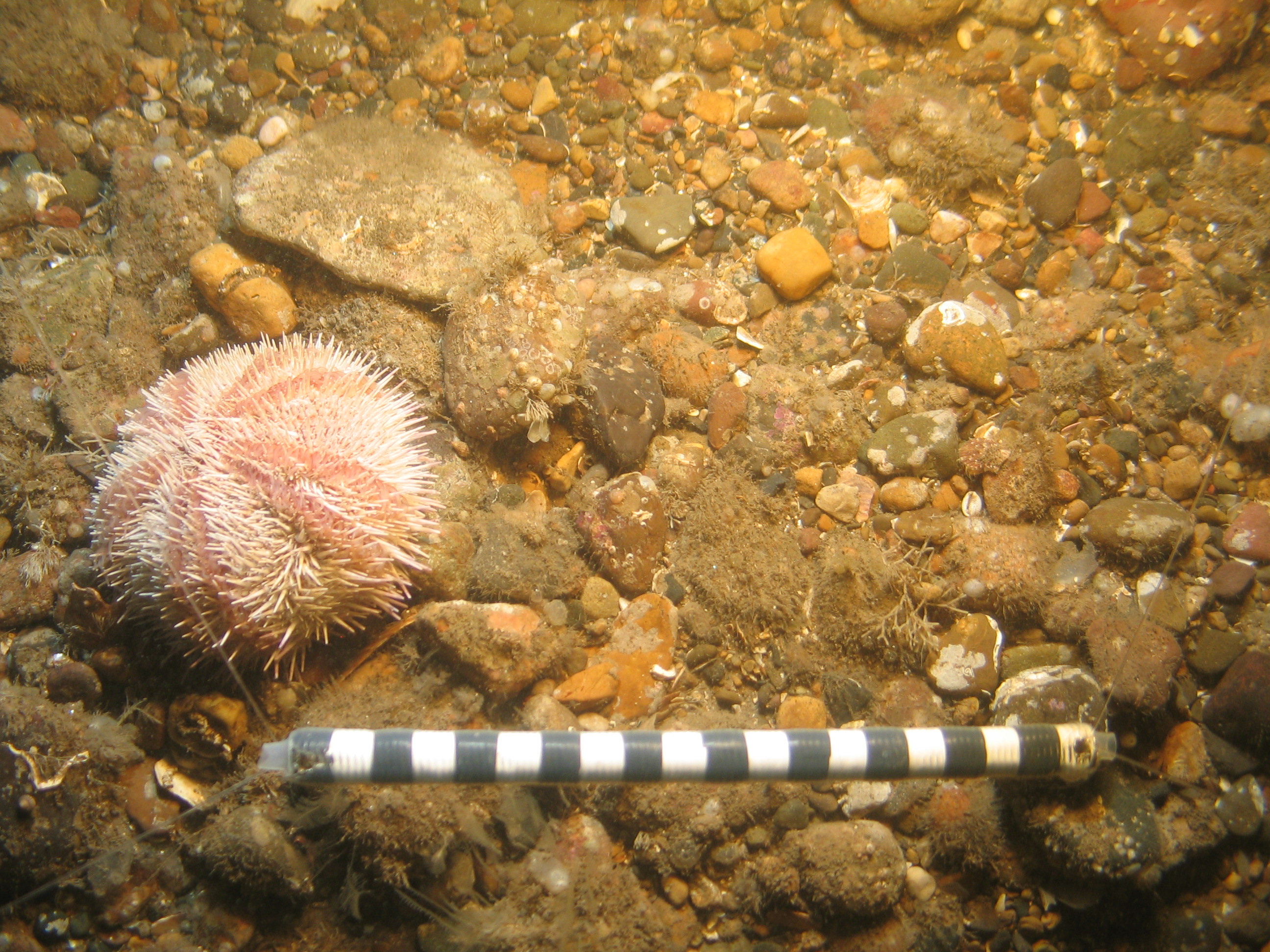
Geologists use two main methods to study the seafloor and underlying sediments and rocks. GeophysicalUsing scientific techniques to take images and map the physical properties of the seafloor, what it looks like and what it is made of. surveyUsing scientific techniques to take images and map the physical properties of the seafloor, what it looks like and what it is made of. techniques use sound waves to map the seafloor morphologyThe form and shape of the seafloor features, what it looks like., the thickness of seafloor sediments and the rocks underlying these sediments. They also take samples of the seafloor sediments and underlying rocks using grabsThis is a general term for the equipment used to scoop up samples from the seafloor, for example a Hamon Grab. and vibrocoresVibrocores are samples of the seafloor sediment layers taken using a long tube-like device, which is driven into the seafloor. The sample can be up to six metres long. to ‘ground truthrefers to information that is collected "on location". This is important when remotely collecting data such as taking samples of the seafloor from a boat. The information is supported by photographs of the actual seafloor, where the samples were taken.’ the geophysicalUsing scientific techniques to take images and map the physical properties of the seafloor, what it looks like and what it is made of. surveys.
The geological maps form an essential foundation for the Outer Thames EstuaryAn estuary is an inlet of the sea, into which flows a river or stream. RECRegional Environmental Characterisation survey - a scientific research project to assess the physical (geology), biological (ecology) and archaeological environment of a particular study area. archaeological and ecological research and interpretations. They help identify where humans might have lived when sea levels were lower, exposing the seafloor, and on what type of sediment certain groups of animals prefer to live today.
Outer Thames EstuaryAn estuary is an inlet of the sea, into which flows a river or stream. Geology RECRegional Environmental Characterisation survey - a scientific research project to assess the physical (geology), biological (ecology) and archaeological environment of a particular study area. results
This section provides a summary of the Outer Thames EstuaryAn estuary is an inlet of the sea, into which flows a river or stream. RECRegional Environmental Characterisation survey - a scientific research project to assess the physical (geology), biological (ecology) and archaeological environment of a particular study area. results for the geological research.
Click on links below to find out about each topic, or scroll down to read the entire text.
- What does the seafloor look like?
- What is the seafloor made of?
- Geological timechart
- Underneath the seafloor
- How is the seafloor made?
You can find out more about the scientific research techniques mentioned in the text by visiting our “How we study seafloor” webpages.
You can find out more about the role of geology in other areas of the RECRegional Environmental Characterisation survey - a scientific research project to assess the physical (geology), biological (ecology) and archaeological environment of a particular study area. research by visiting the Outer Thames EstuaryAn estuary is an inlet of the sea, into which flows a river or stream. Ecology, Archaeology and Sustainability webpages.
What does the seafloor look like?
An important task for the Outer Thames geologists is to understand the morphologyThe form and shape of the seafloor features, what it looks like. of the seafloor. This involved creating a 3-Dimensional map of what the seafloor looks like.
Geologists added the new geophysicalUsing scientific techniques to take images and map the physical properties of the seafloor, what it looks like and what it is made of. surveyUsing scientific techniques to take images and map the physical properties of the seafloor, what it looks like and what it is made of. data to existing datasets to create a map of the modern seafloor. The Outer Thames EstuaryAn estuary is an inlet of the sea, into which flows a river or stream. RECRegional Environmental Characterisation survey - a scientific research project to assess the physical (geology), biological (ecology) and archaeological environment of a particular study area. maps highlighted major features on the seafloor. Geologists studied two deep, parallel channels called the Inner Gabbard Deeps. It is probable that they formed over 10,000 years ago during the last Ice Age, carved into the seafloor by fast-flowing rivers underneath the ice sheet.
The map shows that the Outer Thames EstuaryAn estuary is an inlet of the sea, into which flows a river or stream. RECRegional Environmental Characterisation survey - a scientific research project to assess the physical (geology), biological (ecology) and archaeological environment of a particular study area. study area consists of three main morphologicalThe form and shape of the seafloor zones, which each have distinctive features.
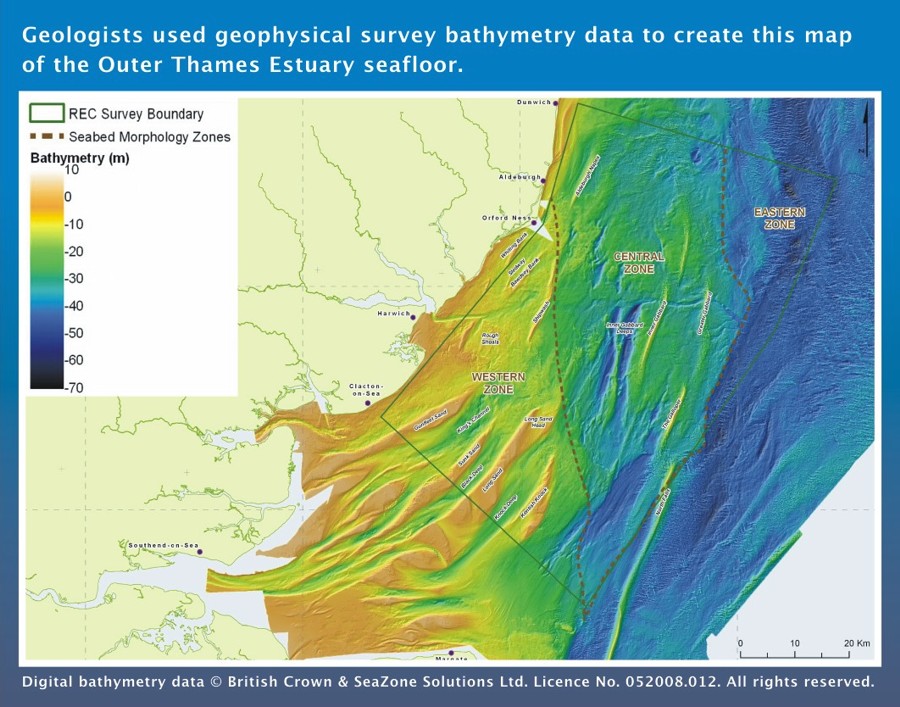
Western Zone: a large sandbank running parallel to the coast dominates this area.
Central Zone: mainly bedrockThe first cemented (solid) layer underlying the surface the Earth. seafloor with thin layers of gravel. It has areas of bedforms and isolated sandbanks. The Inner Gabbard Deeps channels are also in this zone.
Eastern Zone: a large sand dune field.
What is the seafloor made of?
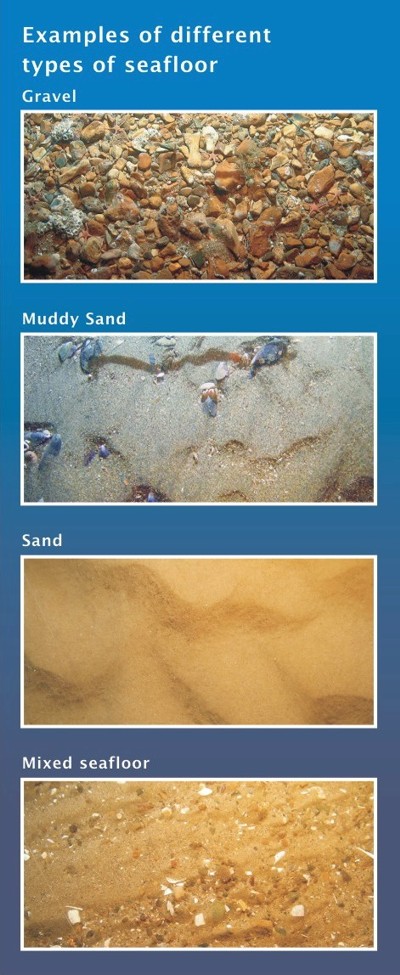
The seafloor is formed of a layer of loose or ‘unconsolidatedloose or not completely solid’ sediments. Geologists studied samples of the Outer Thames EstuaryAn estuary is an inlet of the sea, into which flows a river or stream. seafloor sediments to understand what they are made of.
Out on the boat, geologists took seafloor sediment samples across the Outer Thames EstuaryAn estuary is an inlet of the sea, into which flows a river or stream. RECRegional Environmental Characterisation survey - a scientific research project to assess the physical (geology), biological (ecology) and archaeological environment of a particular study area. study area, using a range of different sized grabsThis is a general term for the equipment used to scoop up samples from the seafloor, for example a Hamon Grab.. In addition, they used geophysicalUsing scientific techniques to take images and map the physical properties of the seafloor, what it looks like and what it is made of. surveyUsing scientific techniques to take images and map the physical properties of the seafloor, what it looks like and what it is made of. techniques to measure the thickness of these modern sediments.
Geologists examined the particle size and properties of all the seafloor sediment samples from the different locations. They classify the size using a system called Folk ClassificationA standardised classification system, which allows geologists to decide what type of seafloor they are looking at, for example gravelly sand..
The mapping of the seafloor properties shows that different areas are characterised by different types of seafloor sediment.
These seafloor surface deposits are HoloceneAn "epoch" on the geological timescale, which runs from 10,000 years ago to the day. It is a part (subdivision) of the Quaternary "period". sediments, laid down during the last 11,700 years. In the Outer Thames EstuaryAn estuary is an inlet of the sea, into which flows a river or stream. geologists discovered that 80% of the seafloor was a thin layer, called a ‘veneer’, of sandy gravels and gravelly sands, covering the older bedrockThe first cemented (solid) layer underlying the surface the Earth. deposits below. You can find out more about these older deposits in the section below. On occasions these older deposits can be seen at the seafloor surface; this is called ‘outcropping’.
The geologists produced this seafloor sediment map for the Outer Thames RECRegional Environmental Characterisation survey - a scientific research project to assess the physical (geology), biological (ecology) and archaeological environment of a particular study area. study area. You can see in our map that there are muddy sands and gravels all along the Thames coastline.
For example, you can see on this map that the Western zone consists of gravelly sands and sandy gravels, as well as the large sandbanks.
Geological timechart
Underneath the seafloor
Underneath the unconsolidatedloose or not completely solid seafloor sediments there are older geological deposits that the Outer Thames EstuaryAn estuary is an inlet of the sea, into which flows a river or stream. geologists also need to understand.
To do this geologists use special equipment called a vibrocorerUsed from a boat, this device uses a long tube, which is driven into the seafloor to collect samples of the seafloor sediment layers. to push a maximum of six metres down into the seafloor and collect samples. They also use sound waves to look deep into the seabed to see even older and deeper deposits.
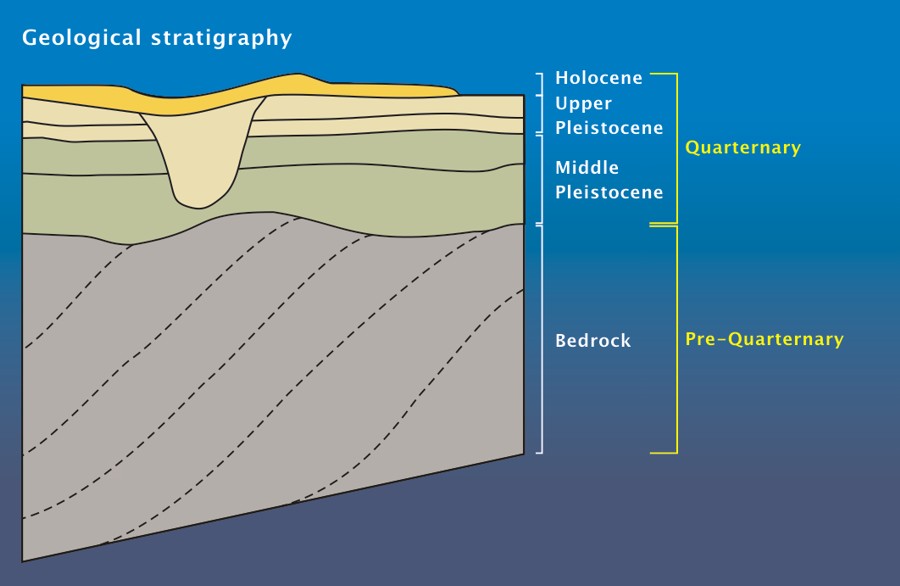
QuaternaryA "period" on the geological timescale, dating from 2.6. million years ago to the present day. It consists of two geological "epochs": the PleistoceneAn "epoch" on the geological timescale, which runs from 3.5 million years ago until 10,000 years ago when the HoloceneAn "epoch" on the geological timescale, which runs from 10,000 years ago to the day. It is a part (subdivision) of the Quaternary "period". starts. It is part (subdivision) of the Quaternary "period". and HoloceneAn "epoch" on the geological timescale, which runs from 10,000 years ago to the day. It is a part (subdivision) of the Quaternary "period".. depositsDeposits of sediment laid down during the QuaternaryA "period" on the geological timescale, dating from 2.6. million years ago to the present day. It consists of two geological "epochs": the PleistoceneAn "epoch" on the geological timescale, which runs from 3.5 million years ago until 10,000 years ago when the HoloceneAn "epoch" on the geological timescale, which runs from 10,000 years ago to the day. It is a part (subdivision) of the Quaternary "period". starts. It is part (subdivision) of the Quaternary "period". and HoloceneAn "epoch" on the geological timescale, which runs from 10,000 years ago to the day. It is a part (subdivision) of the Quaternary "period".. period on the geological timescale (from 2.6 million years ago until the present day).
Underneath the seafloor sediments, you would normally find QuaternaryA "period" on the geological timescale, dating from 2.6. million years ago to the present day. It consists of two geological "epochs": the PleistoceneAn "epoch" on the geological timescale, which runs from 3.5 million years ago until 10,000 years ago when the HoloceneAn "epoch" on the geological timescale, which runs from 10,000 years ago to the day. It is a part (subdivision) of the Quaternary "period". starts. It is part (subdivision) of the Quaternary "period". and HoloceneAn "epoch" on the geological timescale, which runs from 10,000 years ago to the day. It is a part (subdivision) of the Quaternary "period".. depositsDeposits of sediment laid down during the QuaternaryA "period" on the geological timescale, dating from 2.6. million years ago to the present day. It consists of two geological "epochs": the PleistoceneAn "epoch" on the geological timescale, which runs from 3.5 million years ago until 10,000 years ago when the HoloceneAn "epoch" on the geological timescale, which runs from 10,000 years ago to the day. It is a part (subdivision) of the Quaternary "period". starts. It is part (subdivision) of the Quaternary "period". and HoloceneAn "epoch" on the geological timescale, which runs from 10,000 years ago to the day. It is a part (subdivision) of the Quaternary "period".. period on the geological timescale (from 2.6 million years ago until the present day).. These deposits formed over the QuaternaryA "period" on the geological timescale, dating from 2.6. million years ago to the present day. It consists of two geological "epochs": the PleistoceneAn "epoch" on the geological timescale, which runs from 3.5 million years ago until 10,000 years ago when the HoloceneAn "epoch" on the geological timescale, which runs from 10,000 years ago to the day. It is a part (subdivision) of the Quaternary "period". starts. It is part (subdivision) of the Quaternary "period". and HoloceneAn "epoch" on the geological timescale, which runs from 10,000 years ago to the day. It is a part (subdivision) of the Quaternary "period".. period in geological history, which spans from around 2.6 million years ago until the end of the last Ice Age 10,000 years ago. In the Outer Thames EstuaryAn estuary is an inlet of the sea, into which flows a river or stream. most of these deposits have eroded away through glacialAn interval of time (thousands of years) within an ice age that is marked by colder temperatures resulting in the advance of glaciers and sea activity. Geologists were unable therefore to study these deposits.
BedrockThe first cemented (solid) layer underlying the surface the Earth.
Beneath the QuaternaryA "period" on the geological timescale, dating from 2.6. million years ago to the present day. It consists of two geological "epochs": the PleistoceneAn "epoch" on the geological timescale, which runs from 3.5 million years ago until 10,000 years ago when the HoloceneAn "epoch" on the geological timescale, which runs from 10,000 years ago to the day. It is a part (subdivision) of the Quaternary "period". starts. It is part (subdivision) of the Quaternary "period". and HoloceneAn "epoch" on the geological timescale, which runs from 10,000 years ago to the day. It is a part (subdivision) of the Quaternary "period".. depositsDeposits of sediment laid down during the QuaternaryA "period" on the geological timescale, dating from 2.6. million years ago to the present day. It consists of two geological "epochs": the PleistoceneAn "epoch" on the geological timescale, which runs from 3.5 million years ago until 10,000 years ago when the HoloceneAn "epoch" on the geological timescale, which runs from 10,000 years ago to the day. It is a part (subdivision) of the Quaternary "period". starts. It is part (subdivision) of the Quaternary "period". and HoloceneAn "epoch" on the geological timescale, which runs from 10,000 years ago to the day. It is a part (subdivision) of the Quaternary "period".. period on the geological timescale (from 2.6 million years ago until the present day). lies true rock; this is called ‘bedrockThe first cemented (solid) layer underlying the surface the Earth.’. It is millions of years old. BedrockThe first cemented (solid) layer underlying the surface the Earth. is the first cemented layer of the earth’s surface. It can be made of a variety of material, for example, sand or chalk. In the Outer Thames RECRegional Environmental Characterisation survey - a scientific research project to assess the physical (geology), biological (ecology) and archaeological environment of a particular study area. study area, a key bedrockThe first cemented (solid) layer underlying the surface the Earth. deposit that covers the majority of the area is clay and is called the London Clay formation.
How is the seafloor made?
Geologists need to understand the geological processes that created the Outer Thames EstuaryAn estuary is an inlet of the sea, into which flows a river or stream. seafloor, over a period of time which spans million of years.
BedrockThe first cemented (solid) layer underlying the surface the Earth.
The London Clay formation bedrockThe first cemented (solid) layer underlying the surface the Earth. was deposited during the Tertiary period, the name for the period of geological history which spans from 65 million years ago until 2.6 million years ago when the QuaternaryA "period" on the geological timescale, dating from 2.6. million years ago to the present day. It consists of two geological "epochs": the PleistoceneAn "epoch" on the geological timescale, which runs from 3.5 million years ago until 10,000 years ago when the HoloceneAn "epoch" on the geological timescale, which runs from 10,000 years ago to the day. It is a part (subdivision) of the Quaternary "period". starts. It is part (subdivision) of the Quaternary "period". and HoloceneAn "epoch" on the geological timescale, which runs from 10,000 years ago to the day. It is a part (subdivision) of the Quaternary "period".. period began. This deposit is around 48 million years old. The London Clay formed when fine-grained sediment settled in a warm shallow sea, when the climate was warmer than it is today. Fossils in the London Clay show that conditions were tropical or subtropical when the clay was deposited.
QuaternaryA "period" on the geological timescale, dating from 2.6. million years ago to the present day. It consists of two geological "epochs": the PleistoceneAn "epoch" on the geological timescale, which runs from 3.5 million years ago until 10,000 years ago when the HoloceneAn "epoch" on the geological timescale, which runs from 10,000 years ago to the day. It is a part (subdivision) of the Quaternary "period". starts. It is part (subdivision) of the Quaternary "period". and HoloceneAn "epoch" on the geological timescale, which runs from 10,000 years ago to the day. It is a part (subdivision) of the Quaternary "period".. depositsDeposits of sediment laid down during the QuaternaryA "period" on the geological timescale, dating from 2.6. million years ago to the present day. It consists of two geological "epochs": the PleistoceneAn "epoch" on the geological timescale, which runs from 3.5 million years ago until 10,000 years ago when the HoloceneAn "epoch" on the geological timescale, which runs from 10,000 years ago to the day. It is a part (subdivision) of the Quaternary "period". starts. It is part (subdivision) of the Quaternary "period". and HoloceneAn "epoch" on the geological timescale, which runs from 10,000 years ago to the day. It is a part (subdivision) of the Quaternary "period".. period on the geological timescale (from 2.6 million years ago until the present day).
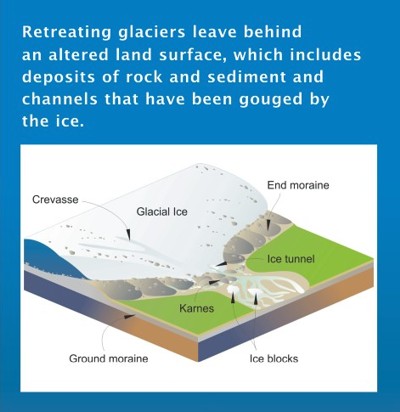
During the last Ice Age, the Outer Thames RECRegional Environmental Characterisation survey - a scientific research project to assess the physical (geology), biological (ecology) and archaeological environment of a particular study area. study area lay at the edge of a massive ice sheet.
During this time, glaciations repeatedly took place. Glaciers eroded the surface of the planet, creating and moving sediment, and led to the formation of many seafloor features like deep-water channels. This period therefore had an important role in the formation of the seafloor. As mentioned above the sediment deposited in the Outer Thames EstuaryAn estuary is an inlet of the sea, into which flows a river or stream. has since eroded away, but you can see some of the geological features carved out by glacialAn interval of time (thousands of years) within an ice age that is marked by colder temperatures resulting in the advance of glaciers action, for example the Inner Gabbards Deep.
Since the last Ice Age: seafloor sediments
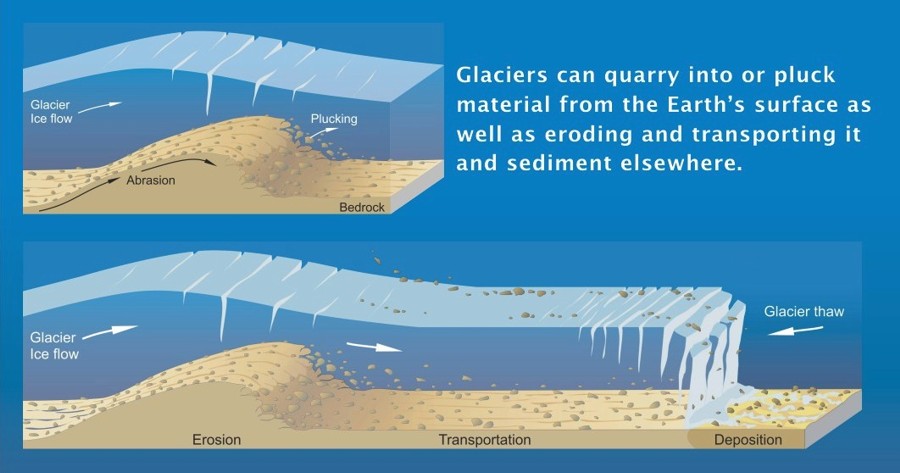
When there were glaciers across Britain, sea levels were low, so at this time the Outer Thames EstuaryAn estuary is an inlet of the sea, into which flows a river or stream. RECRegional Environmental Characterisation survey - a scientific research project to assess the physical (geology), biological (ecology) and archaeological environment of a particular study area. area was dry land. When the climate warmed up, about 10,000 years ago, the ice melted and retreated, leaving the QuaternaryA "period" on the geological timescale, dating from 2.6. million years ago to the present day. It consists of two geological "epochs": the PleistoceneAn "epoch" on the geological timescale, which runs from 3.5 million years ago until 10,000 years ago when the HoloceneAn "epoch" on the geological timescale, which runs from 10,000 years ago to the day. It is a part (subdivision) of the Quaternary "period". starts. It is part (subdivision) of the Quaternary "period". and HoloceneAn "epoch" on the geological timescale, which runs from 10,000 years ago to the day. It is a part (subdivision) of the Quaternary "period".. depositsDeposits of sediment laid down during the QuaternaryA "period" on the geological timescale, dating from 2.6. million years ago to the present day. It consists of two geological "epochs": the PleistoceneAn "epoch" on the geological timescale, which runs from 3.5 million years ago until 10,000 years ago when the HoloceneAn "epoch" on the geological timescale, which runs from 10,000 years ago to the day. It is a part (subdivision) of the Quaternary "period". starts. It is part (subdivision) of the Quaternary "period". and HoloceneAn "epoch" on the geological timescale, which runs from 10,000 years ago to the day. It is a part (subdivision) of the Quaternary "period".. period on the geological timescale (from 2.6 million years ago until the present day)..
For a few thousand years the area was dry land, vegetation grew and people probably lived there by rivers and lakes. As the climate continued to warm, sea level rose and by approximately 8,000 BP the area was flooded by the sea.


